Introducing F1 tyres: a complete and easy guide for fans (@aleinsidef1)
- aleinsidef1
- 9 ott 2024
- Tempo di lettura: 3 min


Tyres are one of the most basic things you need to know about when you want to get inside the F1 world. In this article I'm going to be introducing you to the F1 tyres, trying to explain in the easiest way possible how they work and what they're used for. So, if you're a new fan, (or an old one!) and you're wondering which types of tyres there are, stay here with me and keep reading to find out!
A bit of history: Pirelli and its origins
Let's start right off by introducing the brand: Pirelli. As an italian, I know Pirelli all too well. But if you're from some other country, this name may sound odd. Pirelli is a multinational agency based in Italy, that operates in the automobolistic sector as a producer of tyres for cars, motorbikes and bycicles. The origins of Pirelli's activity date back to 1872, year in which Giovanni Battista Pirelli founded the society "G.B. Pirelli & C." in Milan, destined to the fabrication of elastic rubber articles. The production of car tyres began only in 1901. This brand is one of the main sponsors in F1, and it has been since 2011. Indeed, Pirelli were one of several companies to provide tyres at the start of the World Championship back in 1950, with a host of brands making appearances over the decades, during which time tyre technology has advanced as quickly as the cars. Unlike some previous eras, where multiple tyre manufacturers competed against each other and created what was known as a ‘tyre war’, Pirelli are now F1’s sole, exclusive supplier, with an agreement running through the end of the 2024 campaign. If you want to read and know more about Pirelli and their story, I suggest looking at their website. (Here: https://www.pirelli.com/global/en-ww/homepage/ ) But now, let's start naming the tyres and let's see them up close. Ready to dive into the F1 world?

All the F1 tyres that are being used this year

SOFT TYRES: with their red colour, the soft tyres represent the fastest rubber. But they're most likely to wear out before the harder compounds do. In other words, the soft tyre provides the most grip but isn't durable.

MEDIUM TYRES: the medium tyres are yellow. It's a compromise compound. Usually, it's slower than the softs but faster than the hards. It should last longer than the softs, and not as long as the hards. So, as you can see, the medium tyres have a vaste variety.
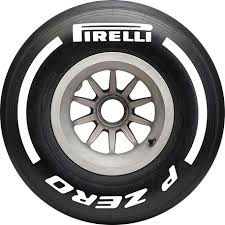
HARD TYRES: White is their colour. The hard tyre will last the longest but isn't as grippy as the soft one. They provide the least grip, but they're supposed to remain in working order the longest. Made from the hardest compound, they offer the longest lifespan, making them ideal for long stints, high temperatures, or abrasive track surfaces where tyre wear is a significant concern.

INTERMEDIATE TYRES: Green ones. (This tyre is my personal favourite!) The intermediates are the most versatile of the rain tyres. They can be used on a wet track with no standing water, as well as a drying surface. The compound has been designed to have a wide working range, guaranteeing a wide crossover window both with the slicks and the full wets.

WET TYRES: Blue is the colour for wet tyres. Currently, F1 rain tyres have a larger diameter than dry tyres, with the wets having a diameter of 10mm more than the slicks. This increases the ride height of the car and makes it less vulnerable to aquaplaning. Sometimes rain tyres are designed to have a smaller diameter than their dry counterparts.The full wet tyres are the most effective solution for heavy rain.
The F1 tyres are coded from C1 (the hardest) to C5 (the softest). Back in 2007, FIA introduced the single-tyre supplier rule to prevent competition between suppliers opting for maximum performance over safety and to keep costs down.

As you can clearly see from this picture, the F1 tyres constantly change. Brand new for 2018 was a tyre that sits below the ultrasoft: an even softer compound called P Zero hypersoft, which was coloured pink, and it was the softest Formula 1 tire that Pirelli has ever made. This new compound was suitable for circuits where maximum mechanical grip is required, such as Monaco. Also new for 2018 was the hard compound, which was coloured ice blue, whilst the superhard, was orange. In total, there were seven slick P Zero compounds, which together with the new Cinturato intermediates and wets expanded the 2018 range to nine options.
Thank you so much for reading this article! Make sure to follow me on instagram (@aleinsidef1) to keep up with the latest news from the motorsport world!


Commenti